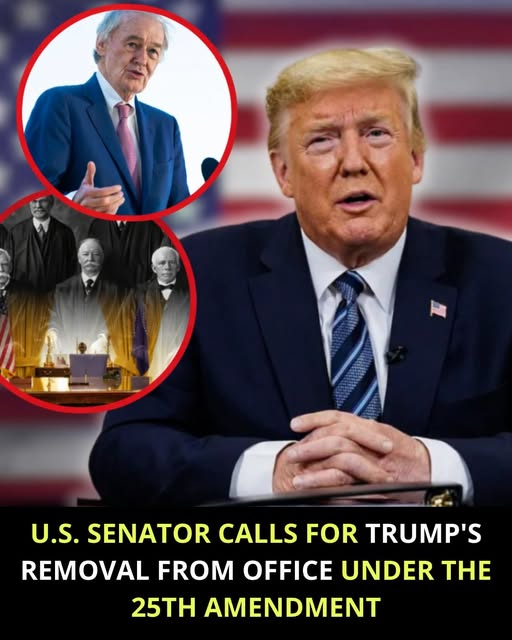
The amendment outlines a constitutional process for dealing with presidential incapacity. Under Section 4, the vice president and a majority of the Cabinet (or another body designated by Congress) can declare a president unable to carry out the duties of the office, at which point the vice president would immediately become acting president.
Constitutional scholars, however, stress that invoking the 25th Amendment is extraordinarily difficult and politically fraught. It has never been used to remove a sitting president, and multiple high barriers would have to be cleared before it could take effect. These include:
The vice president and a majority of Cabinet members agreeing to act
The president’s right to formally contest the declaration
A requirement for two-thirds votes in both the House and Senate to uphold the transfer of power if the president challenges it
For now, the discussion remains largely rhetorical rather than procedural. No formal invocation has begun, and experts widely note that the threshold is extremely high absent clear, broadly accepted evidence of genuine incapacity, such as a severe medical crisis or profound cognitive impairment. The amendment was designed for true inability to serve — not policy disputes, controversial rhetoric, or partisan conflict.
Impeachment under Article II remains the primary constitutional tool for addressing alleged presidential misconduct. The current debate largely reflects ongoing political polarization rather than a realistic or imminent path to removal.
Political Dispute Emerges After Senator Mentions 25th Amendment Following Trump Remarks
A new political controversy has surfaced after a U.S. senator suggested that the 25th Amendment could be considered in response to recent public remarks made by Donald Trump. The comment has sparked debate across party lines and renewed discussion about the constitutional provision’s purpose and limits.
What Prompted the Discussion?
The dispute began after the senator publicly expressed concern over statements made by Trump during a recent appearance. While critics argued that the remarks raised questions about leadership judgment, supporters dismissed the reaction as politically motivated.
The suggestion to consider the 25th Amendment quickly drew national attention, with lawmakers and analysts weighing in on whether the situation warranted such a serious constitutional reference.
Understanding the 25th Amendment
Ratified in 1967, the 25th Amendment outlines procedures for presidential succession and the transfer of power in cases where a president is unable to discharge the duties of the office.
Section 4 of the amendment allows the vice president and a majority of the Cabinet to declare a president “unable to discharge the powers and duties” of the office. If contested, Congress ultimately decides the matter.
Constitutional scholars note that the amendment was designed primarily to address physical or mental incapacity, not political disagreements or controversial rhetoric.
Reactions Across the Political Spectrum
The senator’s remarks were met with mixed responses:
- Critics of Trump said the suggestion reflects broader concerns about stability and accountability.
- Supporters argued that invoking the 25th Amendment in response to political speech sets a dangerous precedent.
- Legal experts emphasized that the amendment carries a high threshold and is rarely considered outside of extreme circumstances.
Several lawmakers cautioned against politicizing constitutional mechanisms, warning that such moves could deepen partisan divides.
Broader Political Implications
The exchange highlights ongoing tensions in Washington, particularly as political rhetoric intensifies ahead of upcoming electoral milestones. Analysts say constitutional provisions like the 25th Amendment often become part of public debate during periods of heightened polarization.
However, history shows that formal invocation of Section 4 has never been successfully executed against a sitting president. Discussions surrounding it tend to remain symbolic unless backed by executive branch leadership.
Conclusion
While the senator’s suggestion has fueled headlines and partisan debate, there has been no formal move to initiate constitutional proceedings. The episode underscores how quickly political disagreements can escalate into broader constitutional conversations.
As reactions continue to unfold, the situation remains a matter of political discourse rather than official action.
