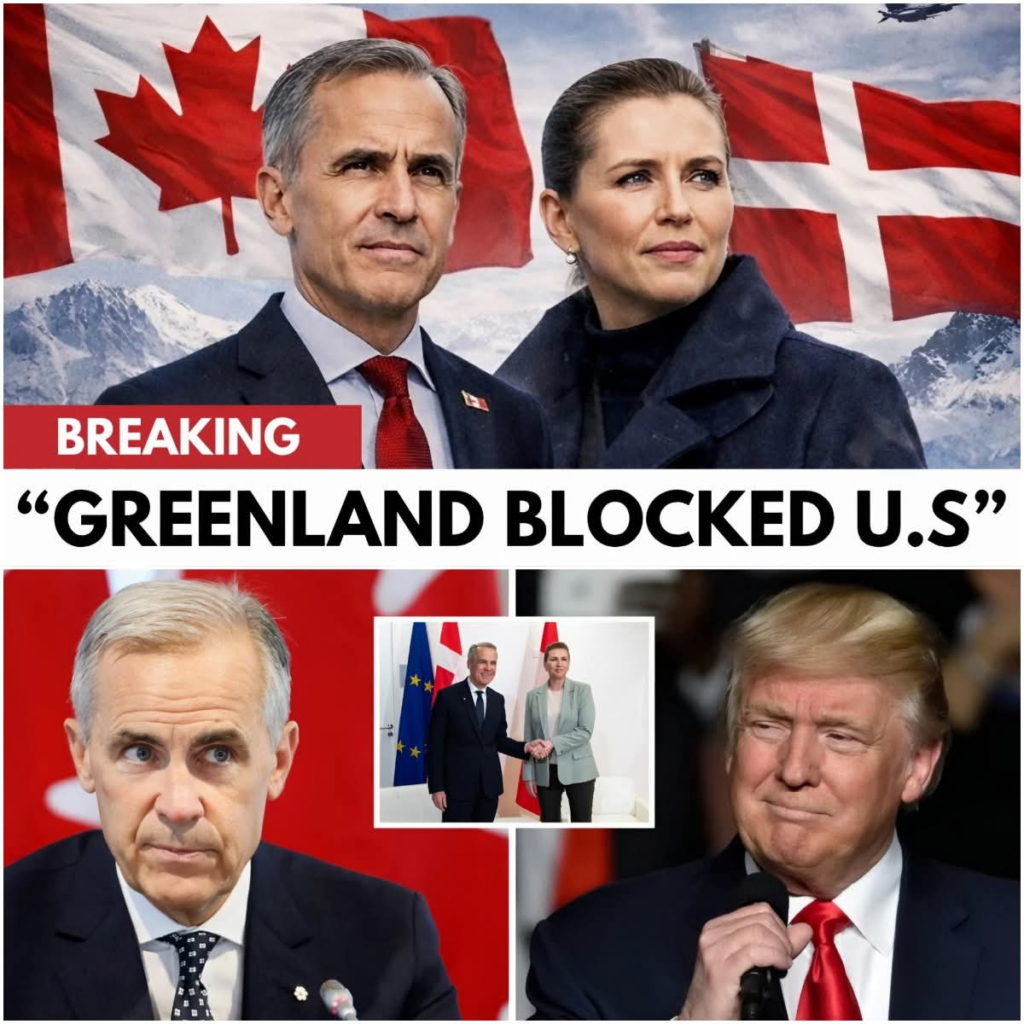
The Arctic is heating up—and this time, it’s not just the ice melting…
In a stunning geopolitical twist, Canada and Denmark are tightening their grip on the Arctic, signaling a powerful message: Greenland is NOT up for grabs.
After repeated pressure from Donald Trump to gain control of Greenland, key allies are pushing back HARD. Leaders in both Denmark and Greenland have made one thing crystal clear: sovereignty is a red line �
Al Jazeera +1
So what’s really happening?
Canada has openly backed Denmark and Greenland, rejecting any U.S. takeover narrative
Denmark has reinforced military presence and deepened Arctic cooperation
NATO allies are increasing coordination to counter rising tensions in the region �
euronews +1
And while talk of a “Canada–Denmark pact” is spreading fast online, what’s actually unfolding is something even bigger:
A strategic Arctic alignment designed to block outside pressure and protect territorial control
Meanwhile, Trump’s push to secure influence in Greenland—driven by its rare minerals, military position, and future shipping routes—has sparked global concern and resistance. �
Reuters
But here’s the deeper play…
This isn’t just about Greenland.
It’s about:
Control of future Arctic trade routes
Access to untapped natural resources
Military dominance in a rapidly changing region
The question now is no longer “Who owns Greenland?”
It’s “Who will control the Arctic’s future?”
One move has triggered a chain reaction—and alliances are shifting in real time.
What do YOU think is really going on behind the scenes?
Is this about security… or something much bigger?
A new Arctic agreement is stirring intense debate across global political circles.
In Copenhagen, Canadian leader Mark Carney and Danish Prime Minister Mette Frederiksen signed what is being described as a historic Arctic sovereignty pact, witnessed by representatives from 26 countries. The agreement establishes a clear rule: no third country can acquire, control, or militarize Greenland without the approval of both Canada and Denmark.
One of the most significant elements is a dual-veto mechanism. Under the pact, any decision involving foreign military bases, major resource-extraction deals, or changes to Arctic territorial status must receive approval from both nations.
Notably, the United States — which had reportedly explored ways to gain strategic access to Greenland — was not part of the negotiations.
Following the announcement, Donald Trump sharply criticized the agreement, calling it a betrayal and warning that economic sanctions could follow.
Supporters of the pact argue that it is designed to protect Arctic sovereignty and prevent powerful nations from pressuring smaller countries over strategically important territory.
But for many observers, a bigger question is now emerging:
Could this deal be reshaping the balance of power in the Arctic?
