The political and legal fallout surrounding Donald Trump has intensified following the discovery of a previously undisclosed email linked to the late financier Jeffrey Epstein, reigniting long-standing questions about transparency, accountability, and political influence.
The newly located document, reportedly unredacted and referenced by members of Congress, appears to directly contradict Trump’s repeated public claims that his relationship with Epstein was minimal and inconsequential.
According to lawmakers who have reviewed portions of the Epstein files, the email in question was sent by Epstein to his longtime associate Ghislaine Maxwell, and includes references to conversations involving Trump that were previously unknown to the public.
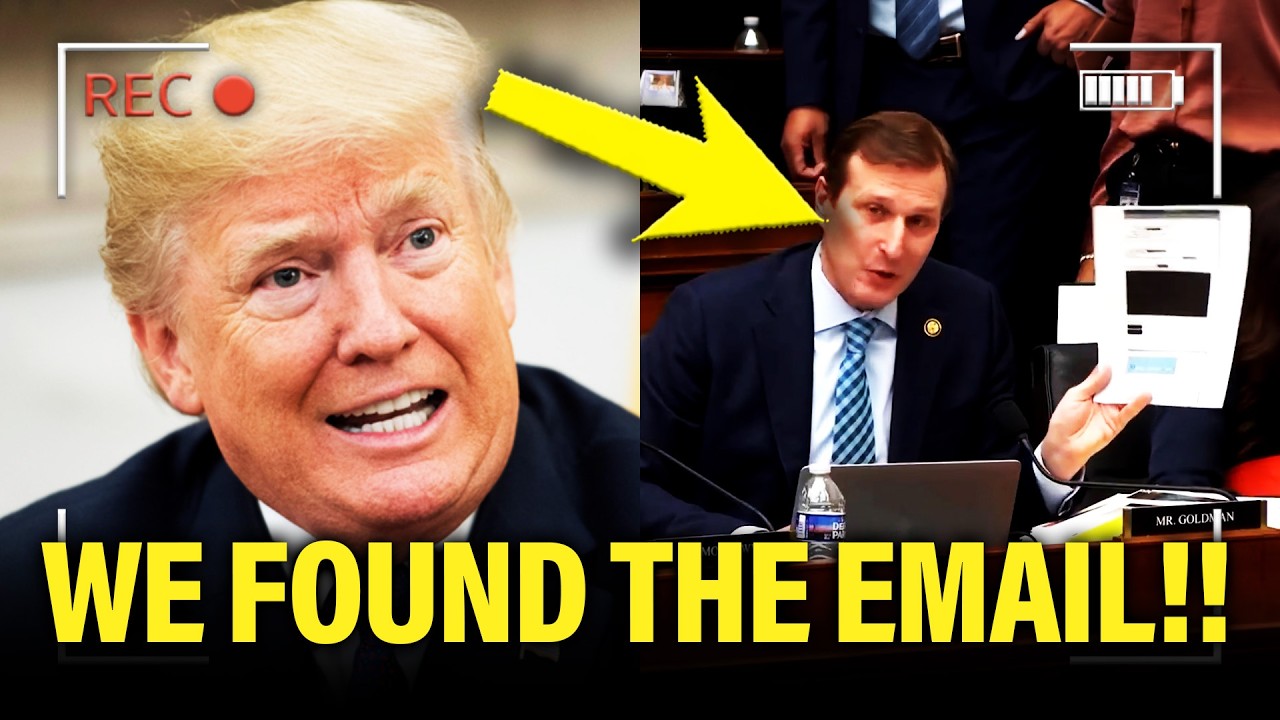
These revelations come amid growing scrutiny over why large portions of the Epstein case files remain redacted, despite congressional access to millions of pages of investigative materials.
Members of Congress have confirmed that while approximately three million pages of documents exist related to Epstein’s criminal network, an estimated 200,000 pages remain heavily redacted or entirely withheld.
Critics argue that these redactions go beyond the legally required protection of victim identities and instead shield politically sensitive information from public view.
The concern has been amplified by claims that some redacted materials directly undermine statements made by Trump regarding the nature and extent of his interactions with Epstein.
Congressman Jamie Raskin, a constitutional law scholar and senior member of congressional oversight efforts, publicly stated that at least one newly located document contains “substantial contradictions” to Trump’s narrative.
Raskin emphasized that the issue is not merely political but legal, noting that selective redaction without proper justification may violate federal disclosure requirements.
Central to the controversy is the application of attorney-client privilege, which has been cited as a reason for withholding certain Epstein-related documents.
Legal experts point out that federal law requires the government to produce a privilege log when invoking such protections, detailing exactly what is being withheld and why.
To date, no comprehensive privilege log has been made public in connection with the Epstein files, raising alarms among transparency advocates.
The failure to provide such documentation has led to accusations of a potential cover-up extending beyond Epstein himself and into the highest levels of political power.
These concerns intersect with the intent of the Epstein Transparency Act, which was designed to ensure public access to non-victim-sensitive information in the case.
Despite the law’s passage, critics say its enforcement mechanisms are weak, lacking a private right of action that would allow victims or citizens to compel compliance.
As a result, accountability largely depends on the willingness of the Department of Justice to enforce disclosure provisions.
Survivors of Epstein’s abuse have expressed frustration that their own testimonies and victim impact statements appear missing or untraceable within the released documents.
Advocates argue that this absence further illustrates systemic failures in how the case was investigated and prosecuted.
Attention has also returned to the controversial plea deal Epstein received in 2008, which allowed him to avoid federal prosecution in exchange for a lenient state-level sentence.
That deal, widely criticized as a miscarriage of justice, is now being reexamined in light of newly surfaced materials suggesting broader institutional interference.
The political dimension of the case has intensified as Trump faces renewed public scrutiny during a period of heightened partisan tension.
Observers note that Trump’s past impeachment battles and ongoing legal challenges have made any new evidence particularly volatile.
At the center of congressional debate is the role of oversight committees, including the House Judiciary Committee, which holds jurisdiction over federal legal compliance.
The committee’s current leadership has drawn criticism, particularly regarding the qualifications and priorities of its chair.
Representative Jim Jordan has been singled out by critics for his lack of a law license while presiding over complex constitutional and legal matters.
Defenders counter that legal insight is not solely derived from bar membership, though critics maintain that the stakes of the Epstein case demand rigorous legal expertise.
Beyond procedural concerns, the moral implications of the uncovered email have sparked widespread outrage.
Human rights advocates argue that any effort to obscure evidence connected to a global human trafficking network represents a profound ethical failure.
The newly surfaced document has renewed calls for independent oversight, including the possible appointment of a discovery referee to review withheld materials.
However, legal scholars caution that criminal cases offer limited avenues for such judicial intervention.
As pressure mounts, lawmakers are considering whether additional legislation is necessary to strengthen transparency mandates.
Victim advocacy groups continue to demand answers, insisting that justice delayed by secrecy is justice denied.
For Trump, the discovery of the email represents yet another challenge to his carefully constructed public narrative.
While no criminal charges have emerged directly from the document thus far, the political consequences may be significant.
The episode underscores broader concerns about how power, privilege, and politics intersect within the American justice system.
As more documents are reviewed and potentially released, the Epstein case once again stands as a symbol of institutional failure.
Whether the full truth will emerge remains uncertain, but the latest revelations have ensured that the story is far from over.
In a case defined by secrecy, the discovery of a single email has reopened wounds, raised new questions, and reignited a national debate over accountability at the highest levels of power.

Leave a Reply