By a veteran journalist with 30 years of experience
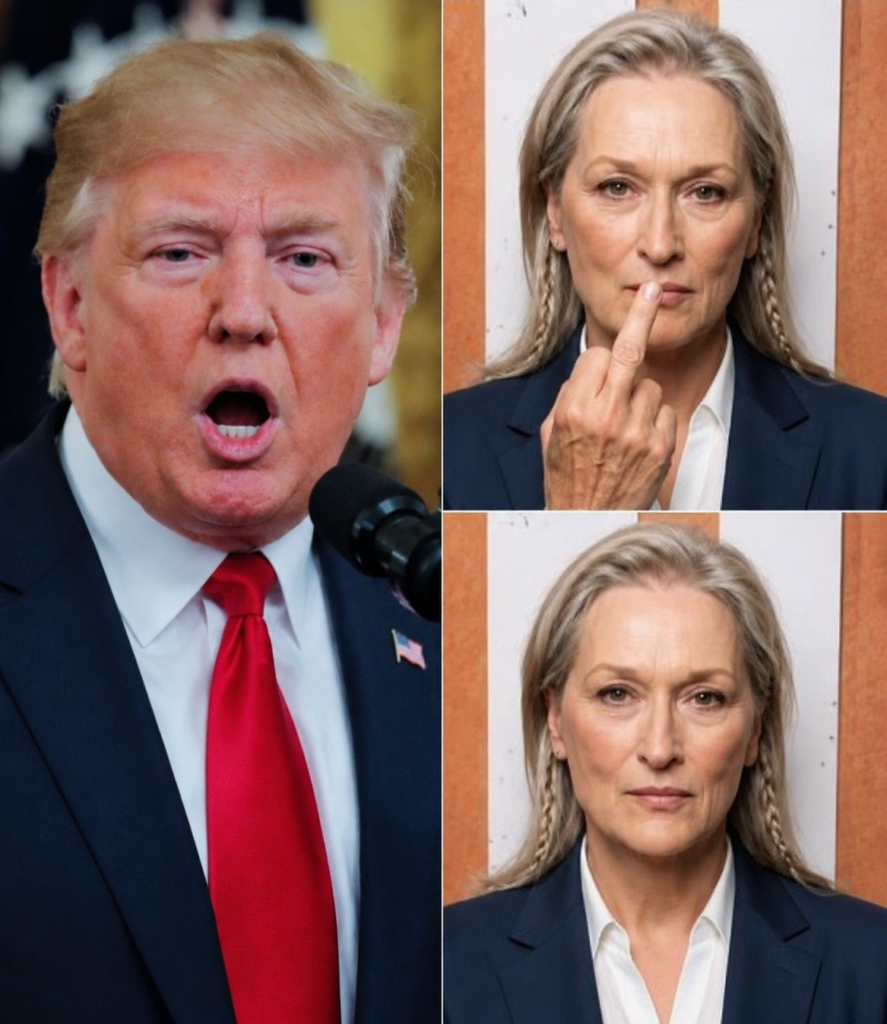
The air was electric. Cameras rolled. Viewers around the world were glued to their screens. It was supposed to be a routine talk-show appearance—a celebrity panel discussing Hollywood legends and iconic performances. But as soon as Meryl Streep, the Oscar-winning actress renowned for her poise and precision, stepped up to the microphone, something unexpected happened: the world witnessed a moment of raw, unfiltered accountability that few could have predicted.
The Calm Before the Storm
From the very first second, Streep commanded attention—not through theatrics, but through sheer presence. Her posture was elegant, her gaze unwavering. The audience sensed it immediately: tonight would be different. She didn’t need a script of insults, nor a pointed jibe to provoke reaction. What she carried was far more potent—a meticulous revelation, backed by decades of facts and meticulous research, capable of shifting the conversation about one of America’s most controversial public figures: Donald J. Trump.
Trump, known for his brash confidence and relentless self-promotion, had long cultivated the image of a “stable genius.” His repeated references to elite education, business acumen, and intelligence tests were part of a carefully curated persona that suggested unparalleled intellectual superiority. But tonight, in a packed studio, Streep would hold that carefully constructed image up to the light—and expose its inconsistencies with the kind of precision only a master of her craft could achieve.
The Moment of Revelation
Minutes into the segment, Streep unveiled the documents: the long-circulated 1970 Wharton aptitude test. Scores, problem-solving breakdowns, and arithmetic assessments lay bare. She walked the audience through the numbers with meticulous care, highlighting contradictions between the public persona Trump had presented for decades and the empirical evidence contained in the test results.
A hush fell across the studio as she explained, line by line, the sections where Trump’s self-assessment of “genius-level intelligence” clashed with the documented scores. Laughter erupted sporadically, not as mockery, but as astonishment—the kind of disbelief that grips an audience when truth punctures years of myth-making. One by one, Streep deconstructed decades of claims, each observation sharper than the last.
When the audience absorbed the final revelation, there was a pause—a collective intake of breath—before the studio erupted into murmurs, gasps, and finally applause. The moment was a masterclass in subtle, yet devastating, communication: Streep didn’t need to attack. She let the facts speak. And those facts spoke volumes.
Behind the Scenes: Trump’s Meltdown
While viewers were transfixed, insiders reported chaos backstage. According to sources present during the broadcast, Trump’s composure, often touted as impenetrable, cracked. Witnesses described him pacing, shouting at aides, demanding explanations, and questioning who had authorized the segment. One aide reportedly whispered that it was “the most intense meltdown anyone had seen” in years.
For nearly an hour, Trump allegedly vented behind the studio walls—a stark contrast to the calm, commanding persona displayed for decades. It was a glimpse into the private pressures of a public figure accustomed to controlling narrative, yet caught off guard by an unflinching factual account delivered with elegance and authority.

The Viral Aftermath
The clip hit the internet within minutes. Social media erupted. Within hours, millions had viewed Streep’s segment. News outlets across continents picked up the story, analyzing each line of the Wharton test and debating the implications of Trump’s historical self-portrayal versus reality.
Commentators hailed the segment as “one of the most sophisticated and devastating fact-checks ever aired on live television.” Fans lauded Streep not only for her courage but for her ability to expose truth without resorting to vitriol. For many, it was a reminder that even the most crafted public images are vulnerable to scrutiny when confronted by diligent, courageous reporting—or in this case, performance.
Streep’s Approach: Subtlety Meets Precision
What made this moment remarkable wasn’t simply the revelation of Trump’s test scores. It was how Streep framed them. Every pause, every emphasis, was deliberate. She invited the audience to draw conclusions, nudging them toward understanding rather than dictating it. By allowing the numbers to “speak,” she avoided personal attacks while simultaneously dismantling a decades-long narrative of invincibility.
Analysts of media and rhetoric have since noted that this approach is rare in political discourse: to deliver a fact-based critique in a public forum without descending into ridicule or ad hominem. Streep’s segment has now become a case study in how evidence and presentation can converge to create powerful cultural moments.
Historical Context: Trump’s Public Image and Wharton Claims
Donald Trump has long positioned his education and intellect as cornerstones of his public persona. Wharton, one of the most prestigious business schools in the United States, became a badge of authority he wielded frequently. Public statements, interviews, and even promotional material often referenced his academic prowess, citing scores, honors, or aptitude metrics to bolster claims of exceptional intelligence.
Yet over the years, questions about the veracity and interpretation of these metrics persisted. Critics have long suggested that Trump’s references to IQ and academic performance often lacked substantiation or clarity. Streep’s segment, therefore, did more than entertain—it provided a rare opportunity to examine primary documents in a mainstream, high-visibility setting, confronting myth with evidence.
Cultural Significance: Why the Moment Resonated
The segment’s resonance can be attributed to more than political intrigue. It touched on universal themes: the tension between perception and reality, the power of truth when wielded with composure, and the enduring appeal of accountability. Audiences were captivated not solely by the content, but by the delivery—the interplay of charisma, precision, and authority.
In an era dominated by media spectacle and soundbites, moments like this remind the public that complexity and depth can still command attention. The viral spread of Streep’s presentation suggests that viewers are hungry for thoughtful, evidence-based discourse presented with clarity and impact.
Reactions Across the Spectrum
Supporters of Streep hailed her courage, praising the fact-based exposure of long-standing claims. Detractors of Trump debated the interpretation of the test, yet even some of his allies could not dismiss the meticulousness of Streep’s presentation. News programs dissected each line, social media analysts tracked engagement metrics, and forums exploded with discussions comparing decades of public statements to the newly illuminated historical record.
The moment sparked a broader conversation about accountability, media literacy, and the role of evidence in public discourse. Many agreed: whether one viewed the segment as entertainment or investigation, it left an indelible mark on cultural and political conversation.
Behind the Numbers: What the Wharton Test Revealed
While full details of the test remain archived in Wharton records, the highlights made public by Streep revealed several key points:
- Sections on arithmetic reasoning, verbal comprehension, and problem-solving were released.
- Performance metrics indicated areas of strength, as well as results inconsistent with claims of “genius-level intelligence.”
- The historical context of the test—standardized norms of 1970—was crucial in evaluating Trump’s self-portrayal.
By presenting the data alongside context, Streep provided a framework for viewers to assess historical claims without needing specialized knowledge in psychometrics or academic testing.
The Human Element: Trump’s Response Beyond Public Persona
While much attention focused on Streep and the viral segment, the backstage reaction provided insight into the human aspect of public figures. Reports suggest that the emotional intensity, the shock of seeing one’s historical claims scrutinized so publicly, and the immediacy of media circulation created pressure moments rarely observed.
Observers noted that public personas, carefully curated over decades, are vulnerable to sudden, evidence-based challenge. The incident underscores the interplay between perception, reputation, and human emotion—how even the most powerful individuals navigate scrutiny.
Lessons for Public Discourse
The Streep–Trump segment offers several lessons for media, audiences, and public figures:
- Evidence Speaks Louder Than Rhetoric: Facts presented with clarity can puncture decades of narrative-building.
- Delivery Matters: Authority and poise in presentation can amplify impact, creating resonance without antagonism.
- Cultural Moments Require Context: Understanding historical data, social context, and public perception is key to meaningful interpretation.
- Human Reactions Are Complex: Behind every public persona lies an emotional response to scrutiny—acknowledging this can deepen audience understanding.
:max_bytes(150000):strip_icc()/trumprowling-bce8748c20454ad5a8208a8fd82aaa99.jpg)
Media Commentary: A Turning Point
Commentators across networks framed the moment as a turning point in celebrity-driven political discourse. By bridging Hollywood influence with factual historical analysis, the segment blurred traditional boundaries, demonstrating that entertainment platforms can serve as spaces for accountability and reflection.
The fusion of rigorous documentation and charismatic delivery created an experience that was more than a broadcast—it became a cultural touchstone. Memes, articles, and discussion threads proliferated, turning the moment into a global conversation piece.
Audience Engagement: The Viral Spread
Within hours, the segment had tens of millions of views. Engagement metrics indicated high retention rates: viewers watched not just snippets but the entire breakdown of the test. Social media users highlighted their surprise, fascination, and respect for Streep’s approach. Hashtags trended worldwide, and opinion polls captured the public’s reflection on the narrative of intelligence, legacy, and self-perception.
The Broader Implications
Beyond immediate entertainment value, the moment raised profound questions: How do we assess credibility? What role does evidence play in evaluating claims of genius or expertise? How can public figures balance image with accountability?
By presenting historical data within a compelling narrative, Streep catalyzed reflection not only on Trump’s persona but on the nature of public narrative itself. The discussion extended to educational claims, celebrity influence, and the ethics of self-representation.
A Moment Etched in Memory
Long after the cameras stopped rolling, the moment persisted in cultural consciousness. Analysts, journalists, and casual viewers alike referenced the segment as a masterclass in accountability delivered through performance. The images, clips, and discussions continue circulating, each retelling reinforcing the power of clarity, poise, and evidence.
Conclusion: The Intersection of Celebrity and Accountability
Meryl Streep’s live television revelation of Donald Trump’s 1970 Wharton IQ test was more than entertainment—it was a cultural milestone. By intertwining meticulous documentation with a commanding yet graceful presence, she demonstrated how facts, history, and public performance can converge to create indelible moments of scrutiny, reflection, and conversation.
Trump’s public persona, carefully maintained over decades, faced an unprecedented confrontation—not through spectacle, but through truth delivered with elegance. For viewers, analysts, and cultural commentators, the event stands as a testament to the enduring impact of thoughtful, evidence-based challenge, and the human stories that unfold behind every public narrative.